Tour de TU

Playfully enhancing bicycle adoption at TU Wien

When it came to selecting courses for the winter semester of 2025/26, the course Design Thinking: Ideation quickly drew my attention due to my background in UX Design. The first of two consecutive courses would lay the groundwork in terms of conception and research for the second part, during which we are going to implement our concepts and findings into a functioning prototype. Although familiar with a lot of the methods that were scheduled to be worked with, the development of a physical artifact was mostly novel to me. As such, Design Thinking turned out to be an interesting challenge for me and my group.

What?

Conception
Literature review
Qualitative research
Prototyping

When?

October 2025 – January 2026

With whom?

Florian Pusch
Maria Beißinger
Lia Tarapat

01
Pulling the Brakes at the Starting Line

In the beginning, there was the word – or in our case, an empty Miro board. Our initial task was to gather associations of any kind, with the sole prerequisite that they would have to be related to cycling and our university. As such, we gathered all kinds of material, primarily images, on our board, and clustered it. Our first idea which was presented in class the following week revolved around navigation and included quickly sketched designs of bracelets or light displays to guide bicyclists without introducing too much distraction from the road.
In the discussions following the presentation, it became clear that neither our professors nor ourselves were quite satisfied with the outcome. Options to navigate by bike are plentiful and quite mature already – also, there was little relation to our university. As such, we steered away from navigation and towards a more playful approach. Our project evolved into a tracking device to record distance covered by bicycle. We imagined a semester-long competition where faculty members could gather kilometers traveled to win a prize for their respective faculty.
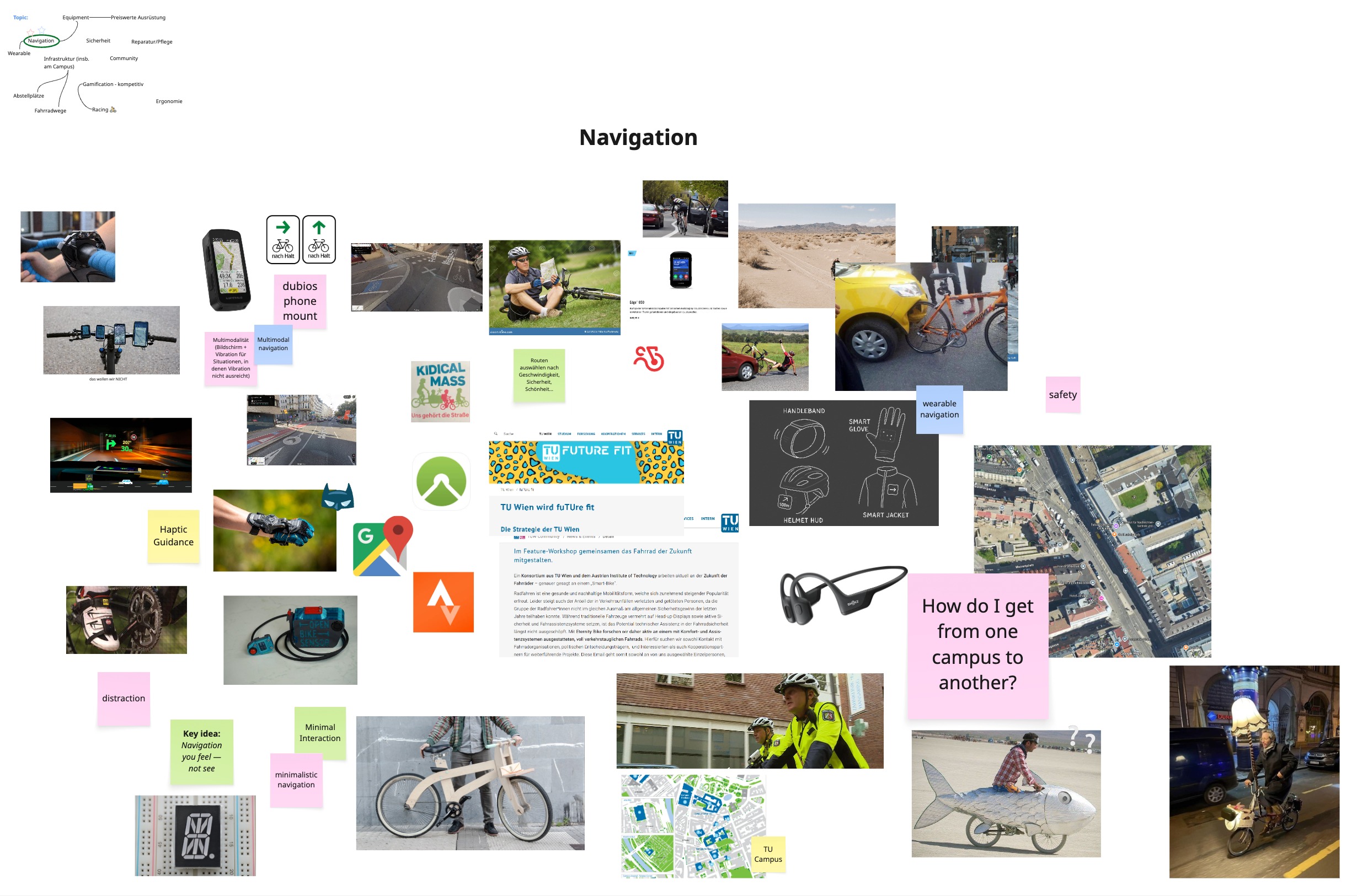

A clustering of our associations allowed us to narrow down our options. I would like to draw special attention to the funny fish bicycle image.
02
Mapping the Route

Our research consisted of a literature research and expert interviews. Academic literature provided valuable insights for us, particularly into the areas of long-term motivation, event organization, and issues related to tracking hardware. We found that a multi-component approach is likely to yield the best results when trying to motivate participants to engage in physical activity. By addressing a variety of motivational factors, we want our competition to appeal to an audience beyond those that are heavy cyclists already. It also became clear that having only one key metric to guide our competition would counteract this goal – as such, it became apparent that we had to diversify. Additional areas of interest were issues of privacy when collecting data.
Our expert interviews built on these findings. In total, we talked to a bicycle shop co-owner, an electronic hardware expert, a student council member experienced in organizing large events, and the co-CEO of a company developing a bicycle navigation application. Key findings highlighted the relevance of proper advertising and attractive compensation. Prominent challenges in increasing bicycle adoption rates include traffic safety and budget constraints.

03
Sticking Sticks Into Spokes

Next up: Using a provocative requisite (which essentially confronts potential users with provocative artifacts in order to measure their reaction and extrapolate further design decisions). We decided to challenge multiple students at campus to a game of rock, paper, scissors – winners would receive a badge congratulating them for their win, whereas losers would receive a badge mocking them. Multiple rounds were played – some of the emotional reactions prompted us to include a consolation prize for the losers of our challenge in order to maintain high participation levels.
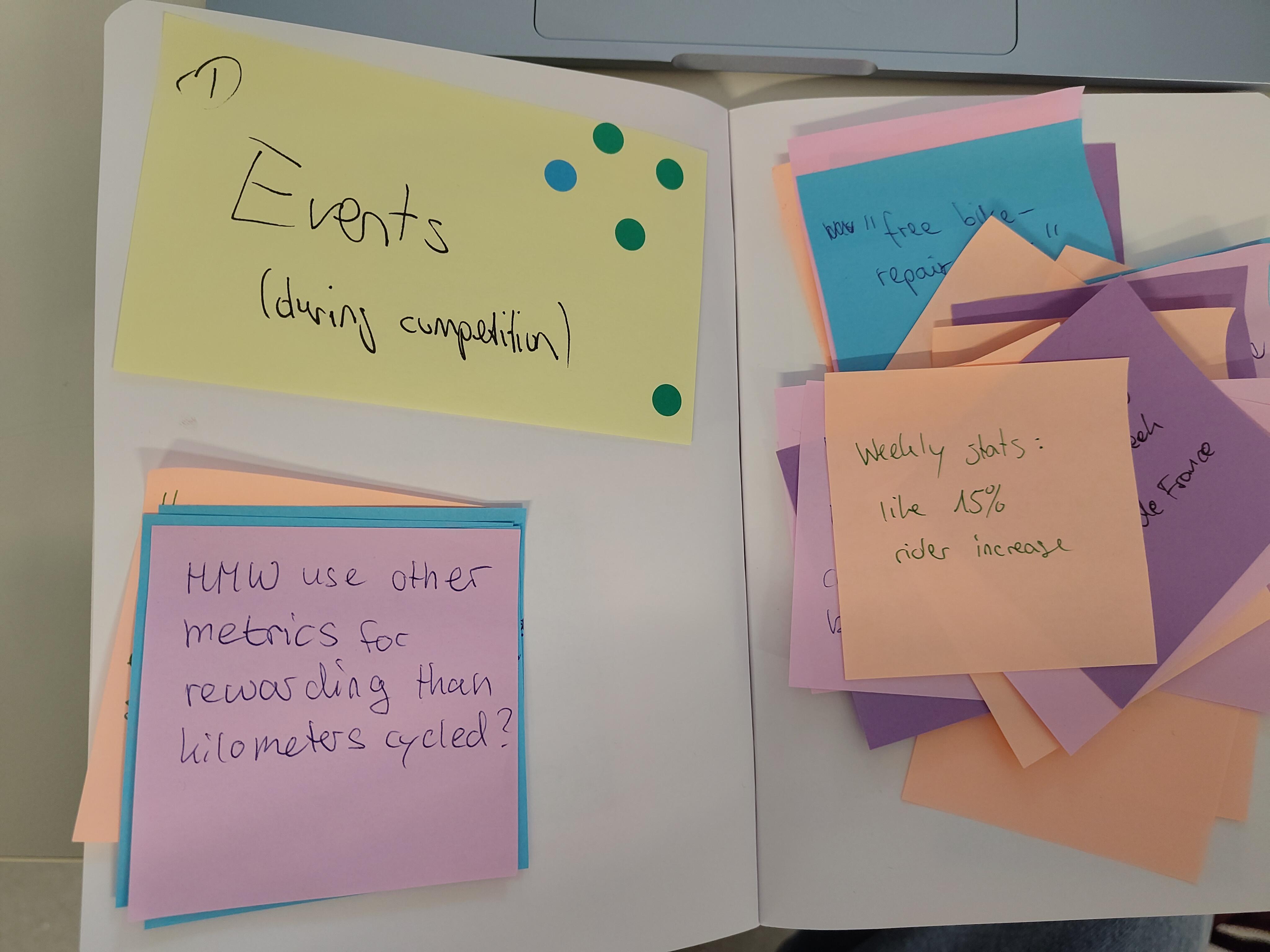
Still, our concept was somewhat lacking. Although we had concluded that we wanted to diversify our project beyond a mere mileage-tracking competition, we were not sure what exactly that could encompass. A workshop session shed some light on this. By leveraging the brain writing method in a one-hour workshop, we were able to generate a whole range of ideas of events and activities that our project could include. Among those were a bicycle flea market, a bicycle-themed quiz, a competition to determine the coolest bicycle, or a scavenger hunt.

The winner badge...
The winner badge...
... and the loser badge. Sorry to everyone who lost.
Our workshop session was quite fruitful for generating more ideas to diversify our project.
04
Taking a Detour

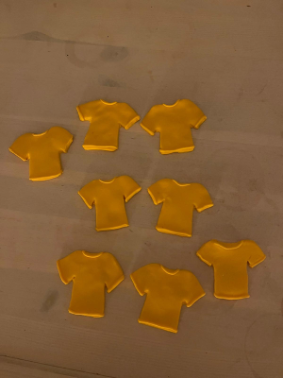
Our final big assignment before concluding the course was to develop a design game and play it with our co-students. The findings would then be used to infer further design decisions. Our concept of hosting one central competition with several "satellite" events such as the flea market or the scavenger hunt was quite fleshed out at this point. However, we were still missing insights into what kinds of events students would actually want to participate in. As such, our design game consisted of several smaller games that are played within one round. The "Tour de TU" is a party game similar to Mario Party where winners receive points (yellow jerseys, in our case) for winning a game – after all mini games have been played, the overall winner is crowned.
Each of our mini games reflected one of the planned satellite activities in our actual project. A bicycle-themed quiz, for instance, reflected a self-repair workshop in the actual project.
Overall, our participants' reactions in the play session were positive. The relatively simple nature was well received and played into our hands during the play session which was limited in time. A desire to play the game in teams was expressed – this coincides with a previous finding from one of our expert interviews where our interviewee stated that interventions to enhance bicycle adoption are most effective when participants are able to play in self-selected teams. Again, our notion of offering a wide selection of possible activities to address multiple target groups was confirmed overall.

Winners of a mini game receive a yellow jersey.
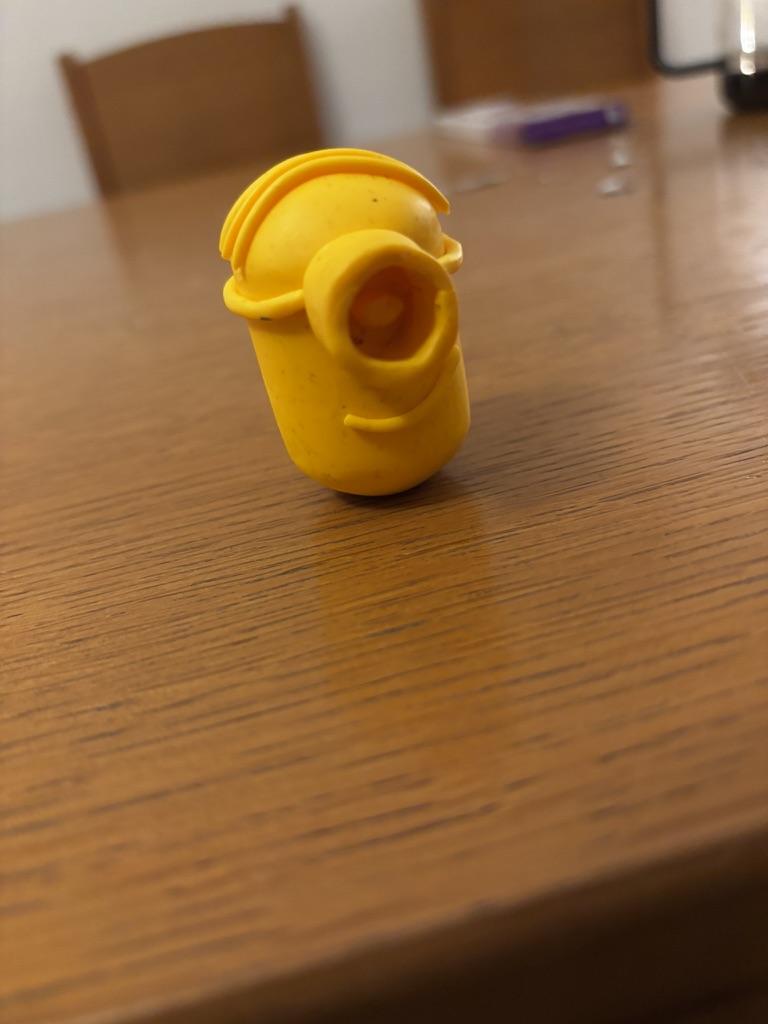
Excess material was used to craft this surprisingly detailed minion, but that's beside the point.
Arts & Crafts.
Arts & Crafts.
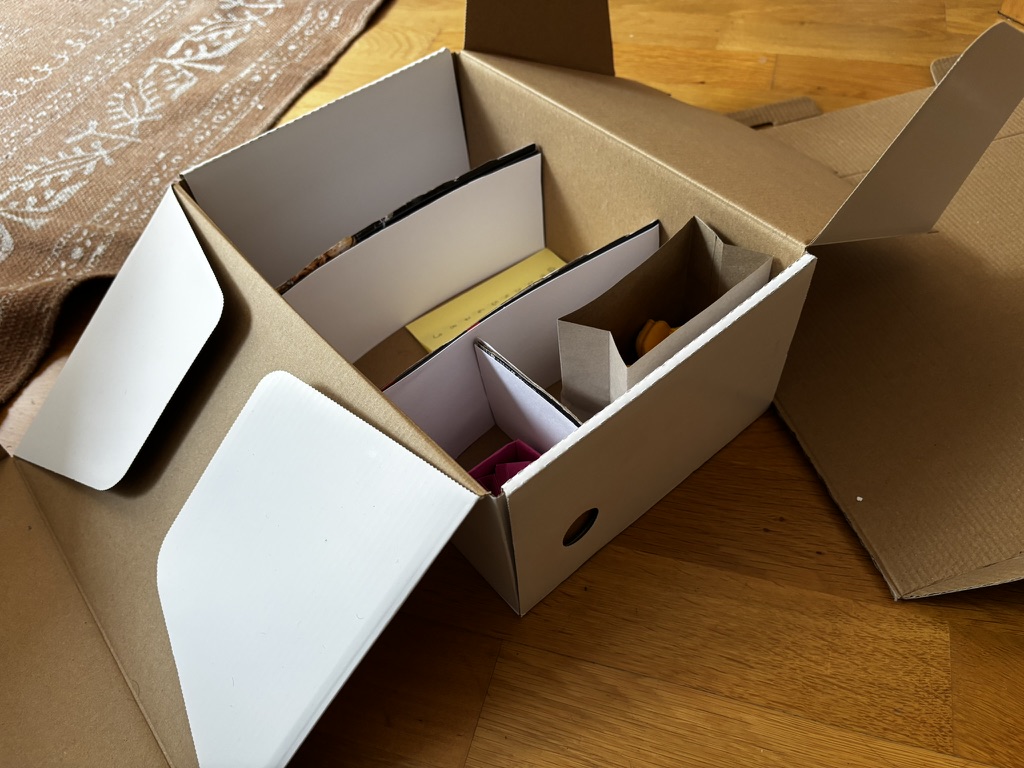
Our mini games in the game box, ready to be played.
05
Coasting Across the Finish Line

Overall, we as a group are quite happy with how our project turned out. Our initial idea was put to rest to the satisfaction of everyone – we were not convinced of our first drafts and neither was our audience. It was a wise move to steer away while time invested was still modest. We did not expect to spend this much time thinking about motivation and engagement and such little time considering hardware details, but are glad that the course offered us the necessary creative freedoms to explore alternative approaches. The course felt much more like lesson in organization, target group communication, and behavioral psychology rather than a hardware development course, which is by no means a bad thing. Of course, this brings along its own set of issues – after all, we still have a device to produce in the next semester, but we will see how that plays out :)